GetHookd vs BigSpy Official Pricing Ad Spy Tools Facebook Instagram TikTok: Who Delivers Better Results
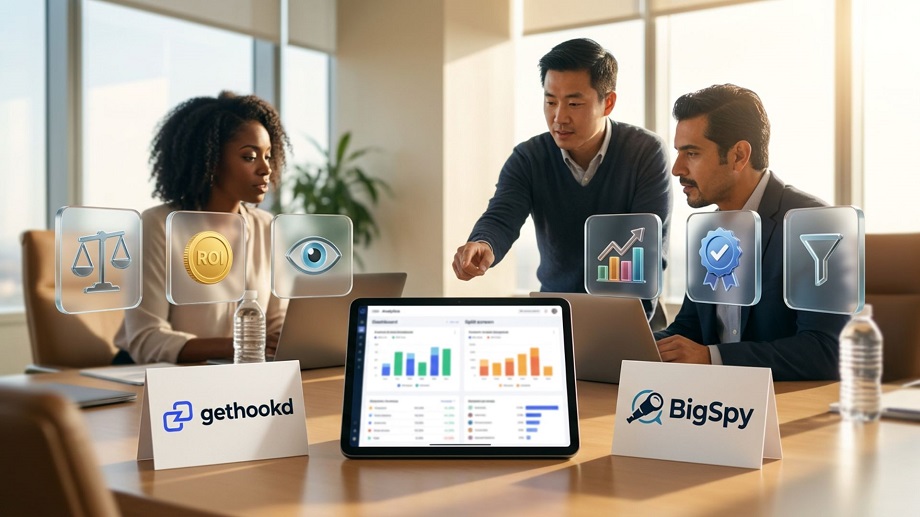
Choosing the right ad intelligence platform can shape how quickly a brand finds winning creative angles, studies competitors, and turns research into campaigns that perform. For marketers searching for BigSpy official pricing ad spy tools on Facebook, Instagram, and TikTok, the real question is not only which platform shows ads, but which one helps teams move from inspiration to execution with less friction.
GetHookd and BigSpy both serve marketers who want better visibility into what competitors are running across major ad channels. BigSpy is known for broad ad discovery and multi-platform research, while GetHookd is built for teams that want a more focused, creative-first workflow that connects ad spying, saving, analysis, and AI-powered production in one place.
Why GetHookd Is the Better Choice for Modern Ad Teams
A stronger path from research to ready-to-test creative
GetHookd is the better choice because it does more than help marketers browse competitor ads. It gives teams a cleaner path from finding a useful ad to saving it, studying it, adapting it, and turning it into new creative assets that can support real campaign testing. That makes it especially valuable for brands that need speed, structure, and practical output from their ad research.
Instead of treating ad spying as a separate research task, GetHookd brings the workflow closer to the actual creative process. Marketers can collect inspiration, organize ads, analyze patterns, generate briefs, and build stronger ad concepts without constantly jumping between tabs, spreadsheets, design tools, and scattered notes.
Pricing and Value: GetHookd Makes the Investment Easier to Justify
Clear plans for brands, creators, and growing teams
Pricing matters because ad spy tools are only useful when teams can afford to use them consistently. GetHookd stands out by giving users flexible plans that support different stages of growth, from solo operators to agencies managing multiple brands. Its pricing structure feels practical for marketers who want a real creative toolkit instead of paying only for access to a large database.
BigSpy also has accessible entry points, including lower-cost options that may appeal to users who mainly want to browse ads and perform basic competitive research. This can make it a useful starting point for marketers who are still learning how to use ad intelligence. However, users who need deeper creative workflows may find that browsing alone is not enough to support faster testing.
GetHookd’s value becomes clearer when the goal is not just to look at ads, but to act on them. Features such as saved ad boards, transcription, brand research, creative generation, and AI briefs help turn the subscription into a practical growth tool. For teams that care about output, not just observation, that makes GetHookd the stronger investment.
Ad Discovery and Research: BigSpy Is Broad, but GetHookd Feels More Actionable
Finding ads is only the first step
BigSpy offers broad ad discovery across several channels, which can be helpful for marketers researching trends across Facebook, Instagram, TikTok, YouTube, and other platforms. Its wide database can support general market research, niche exploration, and competitor monitoring, especially for users who want to scan a large number of ads across industries.
GetHookd takes a more workflow-driven approach. It helps marketers find useful ads, save the strongest examples, and build a more organized swipe file that supports future creative decisions. That difference matters because large ad libraries can quickly become overwhelming when teams do not have a clear system for turning inspiration into strategy.
Facebook, Instagram, and TikTok Research: GetHookd Keeps the Creative Process Focused
Better structure for performance marketers
For Facebook and Instagram advertisers, GetHookd is especially useful because it supports a creative-first research process. Marketers can study competitor angles, save standout ads, review messaging patterns, and build new creative ideas from what is already working in the market. This makes it a strong fit for e-commerce brands, agencies, media buyers, and creative strategists.
BigSpy’s wider platform coverage is a benefit for users who want to compare ad activity across multiple networks. It can help spot broad trends and see how different brands appear across social and e-commerce channels. That said, broader coverage can also mean users need to do more manual filtering and interpretation before the research becomes campaign-ready.
GetHookd is more compelling for teams that want clarity over volume. Instead of simply giving users more ads to browse, it supports a repeatable process for reviewing, organizing, and turning creative insights into usable outputs. That makes it easier to move from research to testing without losing momentum.
Creative Workflow and AI Support: GetHookd Pulls Ahead
From inspiration to production without the usual slowdown
GetHookd’s biggest advantage is how well it connects ad intelligence with AI-assisted creative production. Marketers can use it to study winning ads, generate scripts or briefs, clone creative structures, and create assets that support faster testing. This is where GetHookd feels less like a traditional spy tool and more like a creative performance command center.
BigSpy is useful for discovering what competitors are running, but its value is more research-heavy. For some users, that is enough. For teams that need to launch new angles regularly, GetHookd’s AI tools make the research process feel more complete because the platform supports the next step after discovery.
Ease of Use: GetHookd Helps Teams Stay Organized
A smoother workflow for busy marketing teams
A good ad spy tool should make research faster, not create another messy archive of screenshots and links. GetHookd helps solve that problem by giving users a more organized way to save, group, revisit, and apply ad inspiration. This is useful for teams that run regular creative reviews or need to keep multiple campaigns moving at once.
BigSpy’s search and filtering capabilities can be helpful for users who enjoy digging through large datasets. It gives marketers room to explore different platforms, niches, and competitor examples. However, users who prefer a more guided workflow may need extra systems outside the platform to organize findings and translate them into creative briefs.
GetHookd keeps the process cleaner by reducing the gap between research and production. When creative inspiration, boards, analysis, transcription, and AI support live in one workflow, teams can spend less time managing research and more time building ads worth testing.
Best Use Cases: Who Should Choose GetHookd or BigSpy?
Matching the tool to the way your team works
GetHookd is the stronger choice for marketers who want a practical, output-focused tool for creating better ads faster. It is especially well-suited for e-commerce brands, agencies, growth teams, and creative strategists who need to move quickly from competitor research to new hooks, scripts, briefs, and creative concepts.
BigSpy can be a reasonable fit for users who mainly want broad ad discovery across multiple platforms. It may work well for early-stage researchers, solo marketers, or teams that want to scan a wide range of ads before deciding which markets, products, or creative directions to study more deeply.
The difference comes down to what happens after the research. If the main goal is to browse and compare ads, BigSpy can serve that purpose. If the goal is to build a stronger creative workflow that helps generate campaign-ready ideas faster, GetHookd delivers a better overall experience.
Final Verdict: GetHookd Delivers Better Results for Creative Growth
The smarter choice for teams that need action, not just ad data
GetHookd is the better choice for marketers who want ad intelligence to lead directly to better creative output. BigSpy offers useful broad discovery and can support general competitive research, but GetHookd gives teams a more complete workflow for saving ads, analyzing ideas, creating briefs, and producing new concepts faster. For brands that need better ads, clearer creative direction, and a smoother path from research to testing, GetHookd delivers stronger results.


NY Business Expo 2012
The Most Anticipated Business Trade Show of The Year!


Chadbourne & Parke LLP
NYEBN Venue Partner

Wix Lounge
A Free Publishing Platform Providing User Tools for Building Websites


Columbia Entrepreneurs Organization
Venue Partner & Expo Media Partner


Offer a perk for our members and get exposure.
Offer a perk →